
Walailak University’s research team proved that 2 washing cycles using cold water in a mackerel Surimi production process suffice in terms of achieving a satisfactory level of Surimi properties and quality with less amount of cold water required.
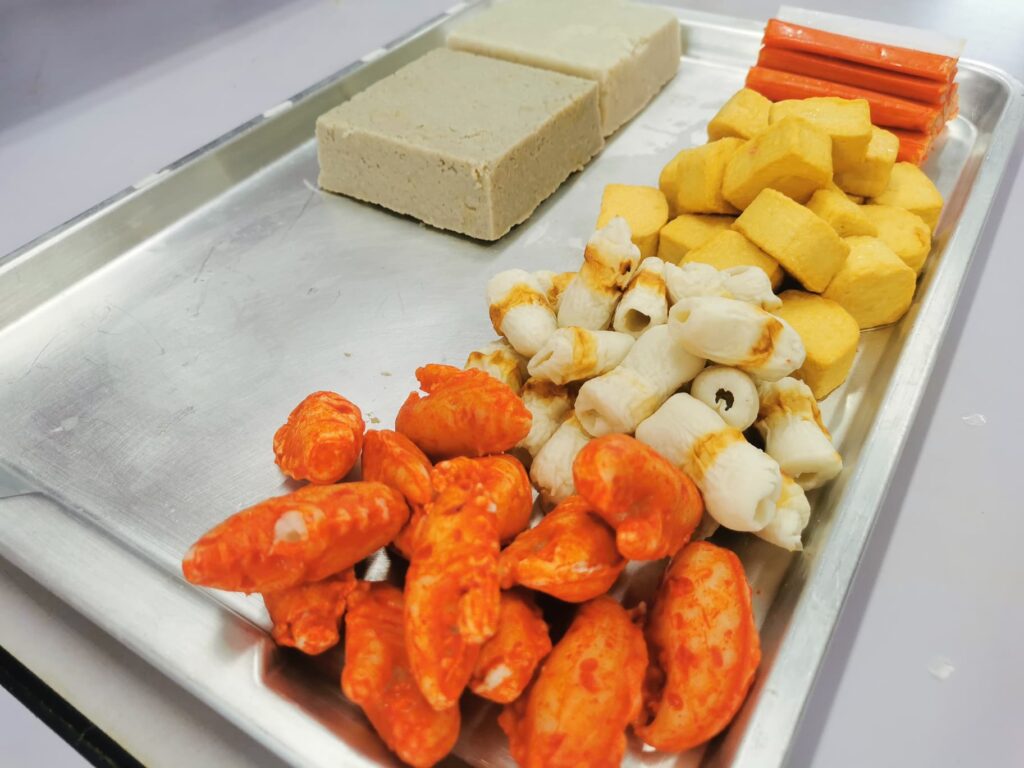
Strolling through daily goods shelves in a supermarket, Surimi-made items in a form of fish balls, Chikuwa, or other products made to mimic the texture and color of meat of crab or lobsters are available and quite popular among consumers given their good tastes, longer shelf life, convenience and economical budget for purchasing compared to fresh seafood.
The entire process involves selecting facilitative raw materials, meaning choosing the right type of fish, namely white-fleshed fish, mincing the meat of the fish, rinsing it off with water, and putting the Surimi in a Surimi block to be taken further into an industrial process. Finally, the Surimi-based instant snacks will be leaving an assembly line and waiting to be picked up in a supermarket’s frozen session.
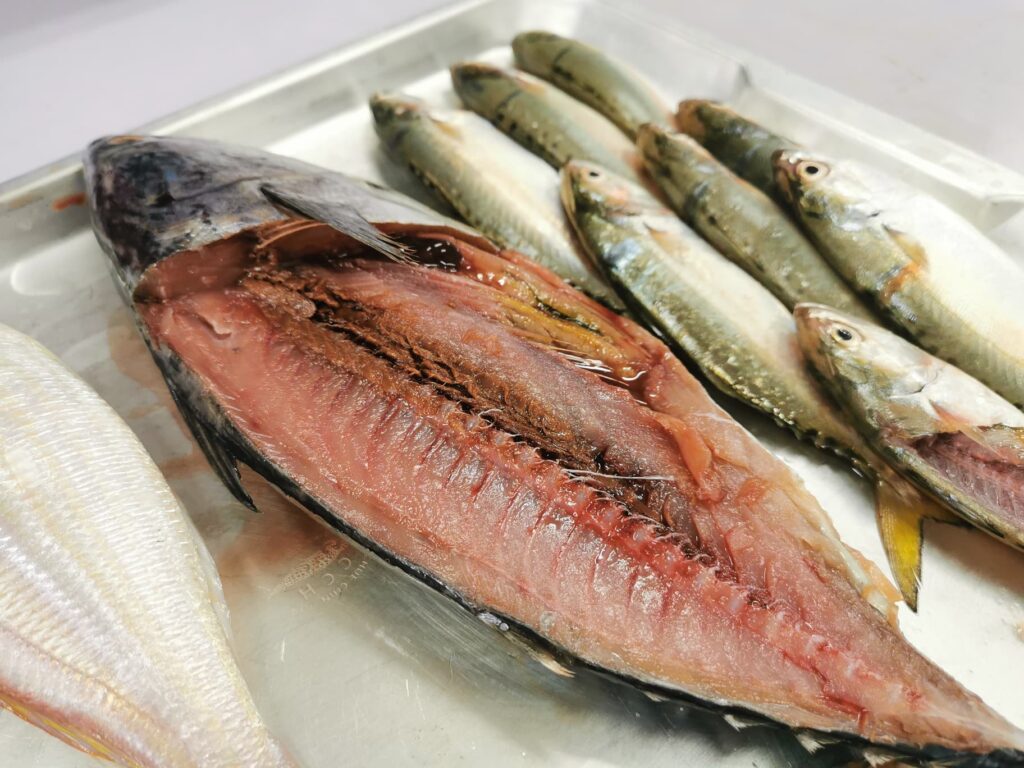
As mentioned above, the production process of Surimi does not sound so burdensome unless overfishing of the white-fleshed fish to meet the global food demands spins out of control forcing Surimi production sectors to bring in dark fleshed fish i.e., mackerel fish, as both a more abundant and economical resource. Dealing with the dark flesh is neither easy nor cheap.
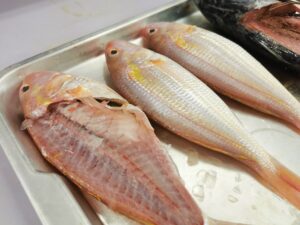 Mr. Panumas Somjid, a Walailak University Ph.D. student in Food Technology and Innovation Research Center of Excellence, Department of Food Science and Innovation, School of Agricultural Technology and Food Industry, explained the difference between white-fleshed fish and dark-fleshed fish meat, “The dark-fleshed fish have dark flesh because they seasonally migrate, the activity kicking their metabolism to high gear and keeping their flesh packed with more blood, fat, and other components. It is less popular for Surimi production because we need to get rid of those compounds which takes much time compared to the white-fleshed fish, in Thailand including bigeye snappers, threadfin bream, lizardfish, and goatfish,” said Mr. Panumas.
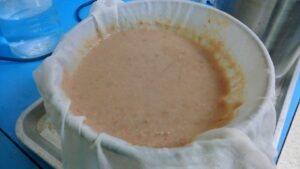
At the cleaning stage, the minced fish flesh will normally be swirled in several types of liquids, both chemical and non-chemical to rinse off undesired compounds such as fishy odor, and lipid compounds. with dark-fleshed fish meat in the process of Surimi making, it takes more effort and time for the washing cycles.
“Getting rid of these unwanted elements, sarcoplasmic proteins, myoglobin, and lipid affects how bouncy the crabsticks will be. You will need 15 volumes of water to wash 1 kg of surimi. That is a lot of waste water if released untreated. Therefore, it is best to reduce the washing cycles,” said Assoc. Prof. Dr. Manat Chaijan, project supervisor and Lecturer of the School of Agricultural Technology and Food Industry, Walailak University, was listed as a 2021 Top’s 2 percent Scientists by Stanford University in the Field of Food Science.
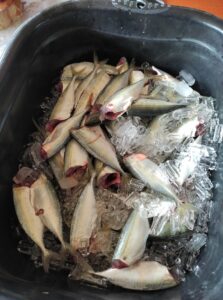
Therefore, in this study, the WU Researcher team including Mr. Panumas Somjid, Associate Prof. Dr. Worawan Panpipat, Prof. Dr. Ling-Zhi Cheong, and Associate Prof. Dr. Manat Chaijan investigated the Bio-Physico and Chemical Rheological and Gel forming properties of minced Indian mackerel, dark-fleshed fish local to Thai Gulf, after the 1 washing cycle, 2 washing cycle and 3 washing cycle, referred to in the study as W1, W2, and W3 respectively. An underlined sub-question is:
“Do we need to go to W3 to achieve the best result? – the level of quality surimi’s Bio- Physico and Chemical Rheological and Gel forming properties, yet not unnecessarily incurs too much cost or environment-damaging wastes”. Among other liquids common in the rinsing process including tap water, sodium chloride, sodium bicarbonate, carbonated water, and ozonized water, cold water is chosen for safety reasons.
In the process, Indian Mackerels are put in three washing cycles W1, W2, and W3, each representing the 1 cycle washing, the 2-cycle washing, and 3-cycle washing with a 1:3 mince to water ratio. In the end, yields, lipid compounds, and other properties including whiteness were compared to determine the most efficient number of cycles. Regarding the Surimi yields, the more you wash it, the more it shrinks. That is because cold water swiped away the blood, pigment, and fat.
In terms of lipid or “fat”, a gel formation hindrance and cause of unpleasant smells, which needs to be eliminated. It seems that the more the minced is washed, the more it is reduced. However, W2 and W3 rinsed minced did not yield significantly different outcomes. Surimi from W2 and W3 cycle provided the same rheological patterns and Fourier -transform infrared spectroscopy (FTIR) spectra like unwashed mince with the highest gel strength, whiteness, and the lowest expressible drip, thiobarbituric acid reactive substances (TBARS) and fishy odor.
As for the Myoglobin, a heme protein accounting for the quality of fish muscle, the W2 and W3 minced had identical levels of residual myoglobin. For the Sarcoplasmic proteins to be able to be dissolved in water, the more you wash it, the more undesired compounds can be eliminated. However, no huge difference was found.
Lastly, regarding the Reactive SH content (-SH) playing a role in gel strengthening during gelation, for this, Panumas gave a simple clarification that the more Surimi is washed. “so – SH is a group in the amino structure of the protein. Its increase or even proper presence will strengthen gel formation during heating by forming SH-SH disulfide bonds. Therefore, the more fish fillets are washed, the more – SH is unfolded as a result of partial denaturation of proteins pulling it out from the protein structure. That means more opportunities for disulfide bonds to form.”
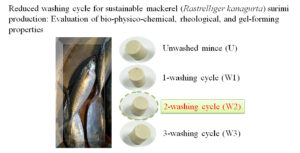
In the study, the SH content seems to increase after W1 – one cycle of washing and significantly does so in W2 or W3 because, as explained by Panumas, the washing can maximize the unfolding of protein structure. Given As a result of the evaluation, W2 is sufficient to produce high-quality surimi from Indian mackerel sustainably with saved costs.